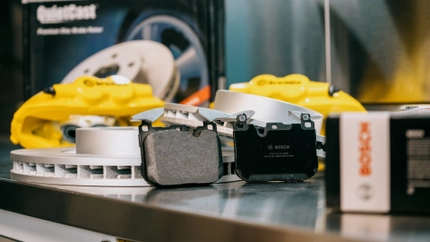
Brake rotors are by far the most straightforward component within the brake system. At their core, they’re nothing more than metal plates stuck behind the wheels for the brake pads to grab onto. But in reality, their size, shape, weight, and composition play a massive factor in braking performance across all applications. You can have solid or vented, slotted or drilled, and steel or carbon, each changing the feel beneath your feet. So, what does that mean for you?
What Is A Brake Rotor & What Does It Do?
The brake rotor doesn’t actively do anything. It doesn’t have moving parts, or any parts for that matter, in the most common applications. It’s a straightforward piece of equipment made of steel in all but a few applications.
The brake rotor’s primary function is to provide the friction surface that the brake caliper clamps around to slow the vehicle. They’re typically fitted on the wheel hub, rotating in tandem with the wheel, though older Jaguar models are notorious for their brakes mounted inboard of the suspension. In both cases, they’re nothing more than something the caliper can grab onto to slow the vehicle. That sounds simple, but it’s a little more involved than that.
The rotor isn’t just some random metal cast into the right shape and slapped onto a vehicle. Brake manufacturers carefully choose the metallurgy before casting and machining the rotors to extreme tolerances. Each one needs to be balanced perfectly; otherwise, its rotation while on the vehicle will cause significant vibrations. The rotor faces are also machined to near-perfect flatness, as a difference of just 0.05mm is out of spec. Rotors must keep their perfect balance and finish while repeatedly being clamped on by the brake pads and heated to over 600°F.
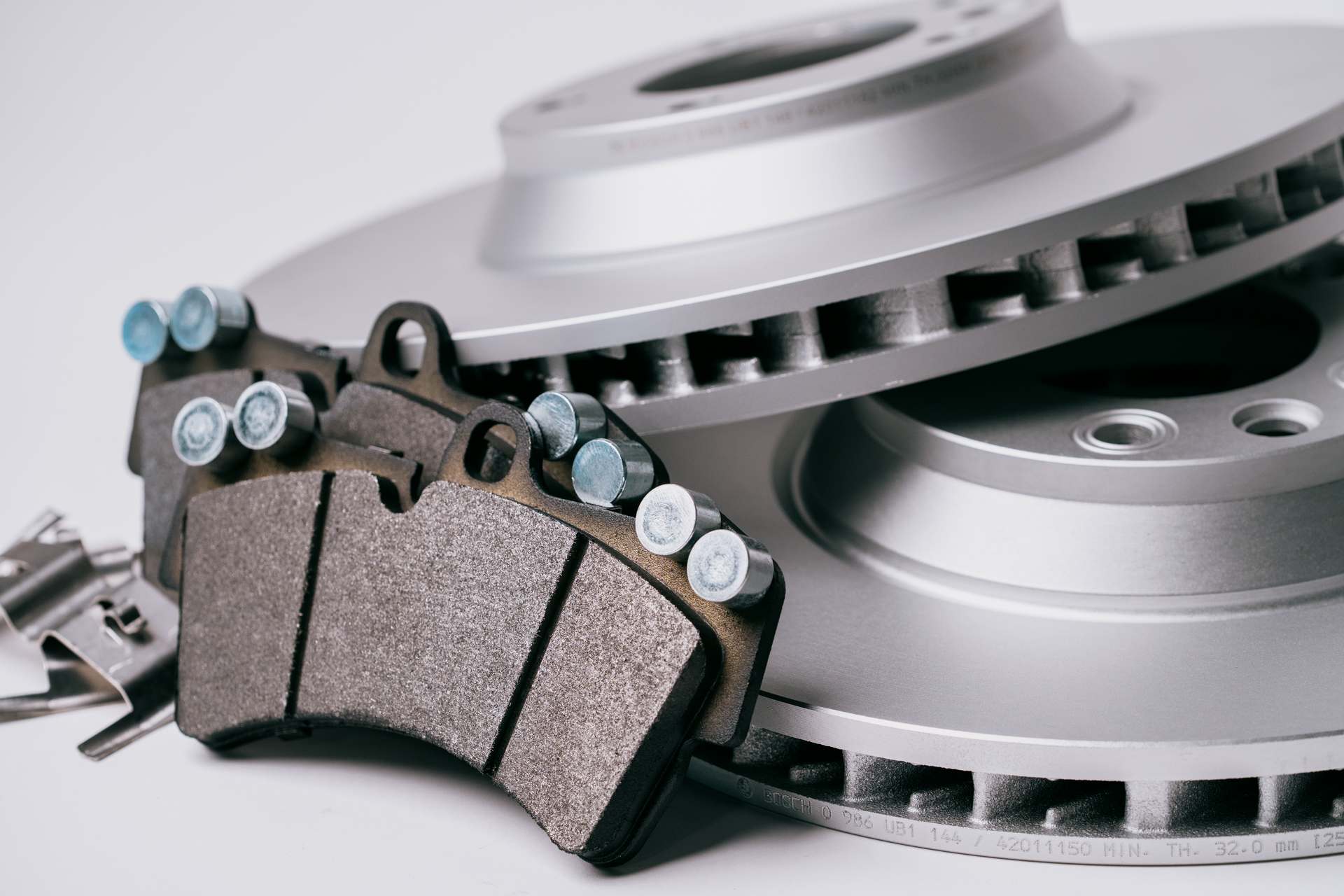
Most modern rotors are vented, meaning the disc has two separate friction surfaces connected by vanes. The vanes draw air through the rotor, cooling the friction surfaces as the pads grind against them. Automakers still use non-vented rotors, but only on smaller, non-performance-focused models on the rear axle. Conversely, the exotic, track-ready performance machines will use rotors made from a vented ceramic carbon composite material. They’re significantly lighter than steel rotors and have much better thermal performance, essentially eliminating brake fade.
What Makes A Good Performance Brake Rotor?
Brake rotors really only have one job, but the requirements for a Golf GTI are not the same as those for a GT3-spec race car. Commuting and performance driving put drastically different strains on the brake system, and a rotor developed for one of those applications may not be good enough for the other. It’s crucial to figure out what kind of driving you’ll be doing before grabbing rotors. Once you have, you can search for a rotor with a few key characteristics.
High-performance street cars and race cars all need brake rotors that withstand repeated aggressive braking and the extreme temperatures that braking from triple-digit speeds inflicts on a rotor. If a rotor gets too hot, its friction surface will warp, creating a wavy surface for the caliper to clamp onto. Under braking, that wavy surface will shake the steering wheel, cause pulsing through the brake pedal, and make terrible noises. In extreme cases, the rotor surface can even form cracks, which will cause catastrophic damage if ignored and driven on. As such, thermal stability is crucial for a rotor developed for a performance application.
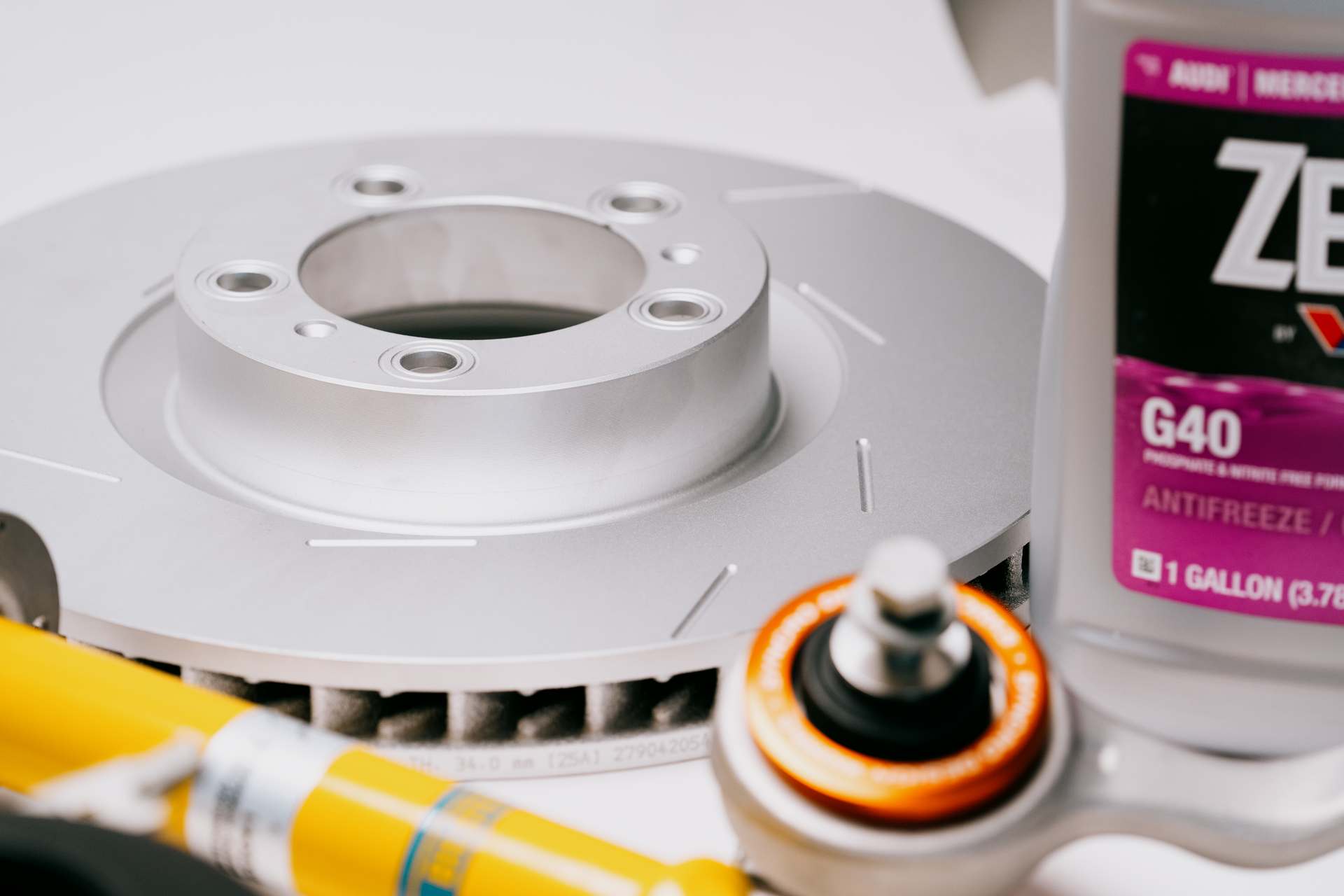
The most critical component of a performance brake rotor is its chemical makeup. Steel rotors are mainly composed of iron, but many other elements, like carbon, are mixed in to improve durability. While carbon isn’t a metal, it plays a massive role in a rotor's thermal stability thanks to its ability to dissipate heat faster than iron. The higher the carbon content, the more efficient the rotor is at shedding heat, which prevents warping and heat transfer into the brake fluid. The latter is crucial, as brake fluid boils, killing brake pressure. Carbon is also a much harder element than iron, so it improves durability and wear resistance, resulting in a longer lifespan than a rotor with a lesser carbon content.
While weight and size don’t matter as much as metallic makeup, both factors contribute to how well the rotors can benefit a particular car.
Brake rotors are fitted to the wheel hub, making them unsprung weight. Without getting too into what that means, reducing unsprung weight is one of the most beneficial things you can do to any performance vehicle. It’ll benefit acceleration, cornering, and braking performance without any negative impact in return. As most brake rotors are cast steel alloy, they’re generally very heavy, but automakers and aftermarket manufacturers have begun to combat that with a few solutions.
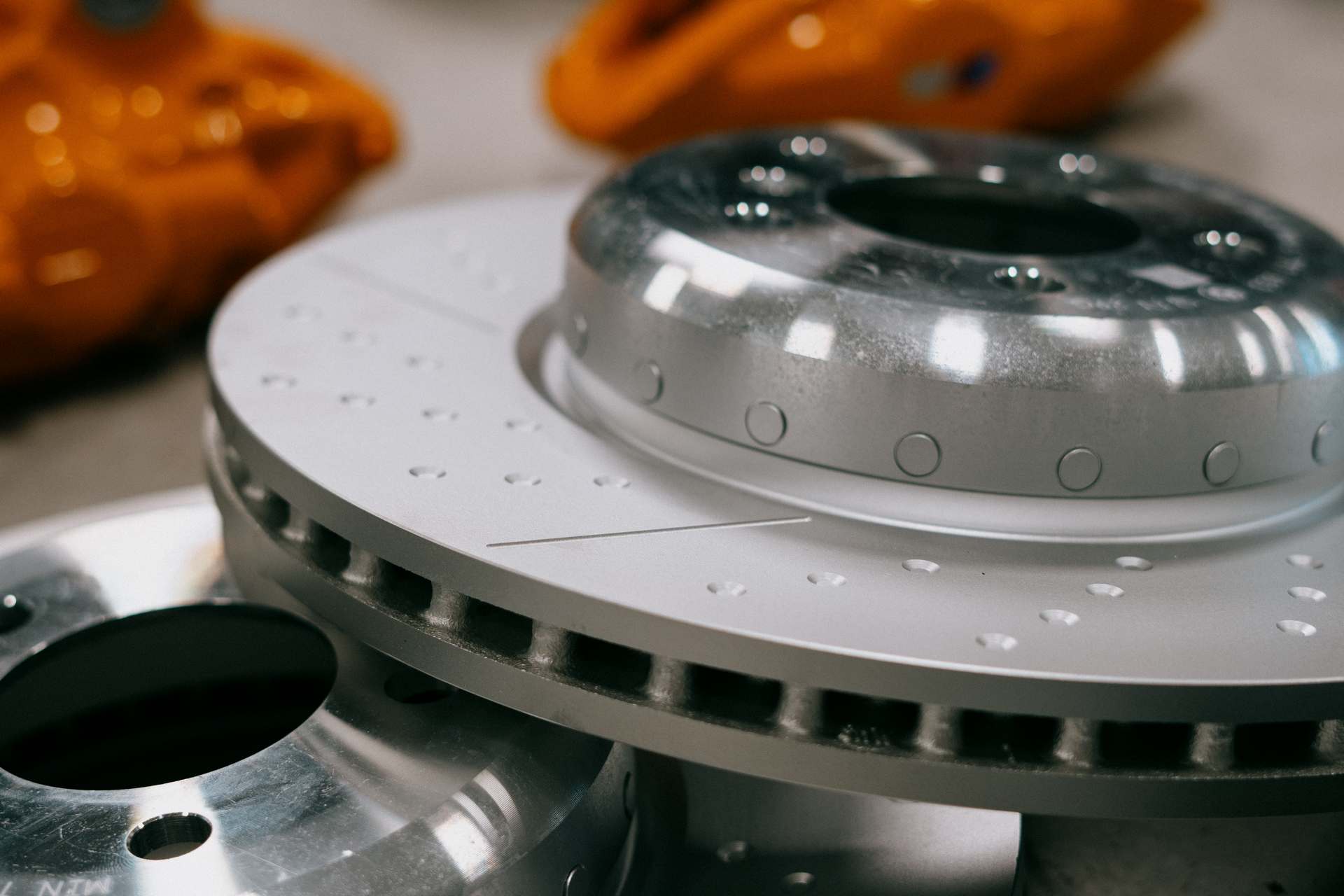
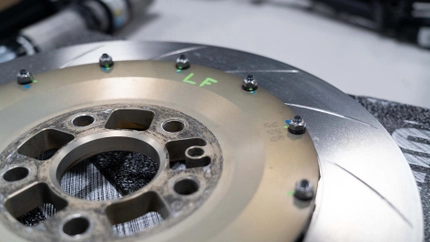
The steel rotor friction ring remains in every case, but the hat—the center portion that mounts over the wheel hub—is aluminum. Riveting the two pieces together solves the weight issue without significantly increasing cost over an all-steel rotor, which has led manufacturers Mercedes-AMG and BMW M to adopt them. However, the aftermarket supplies the best version of the two-piece rotor in all aspects.
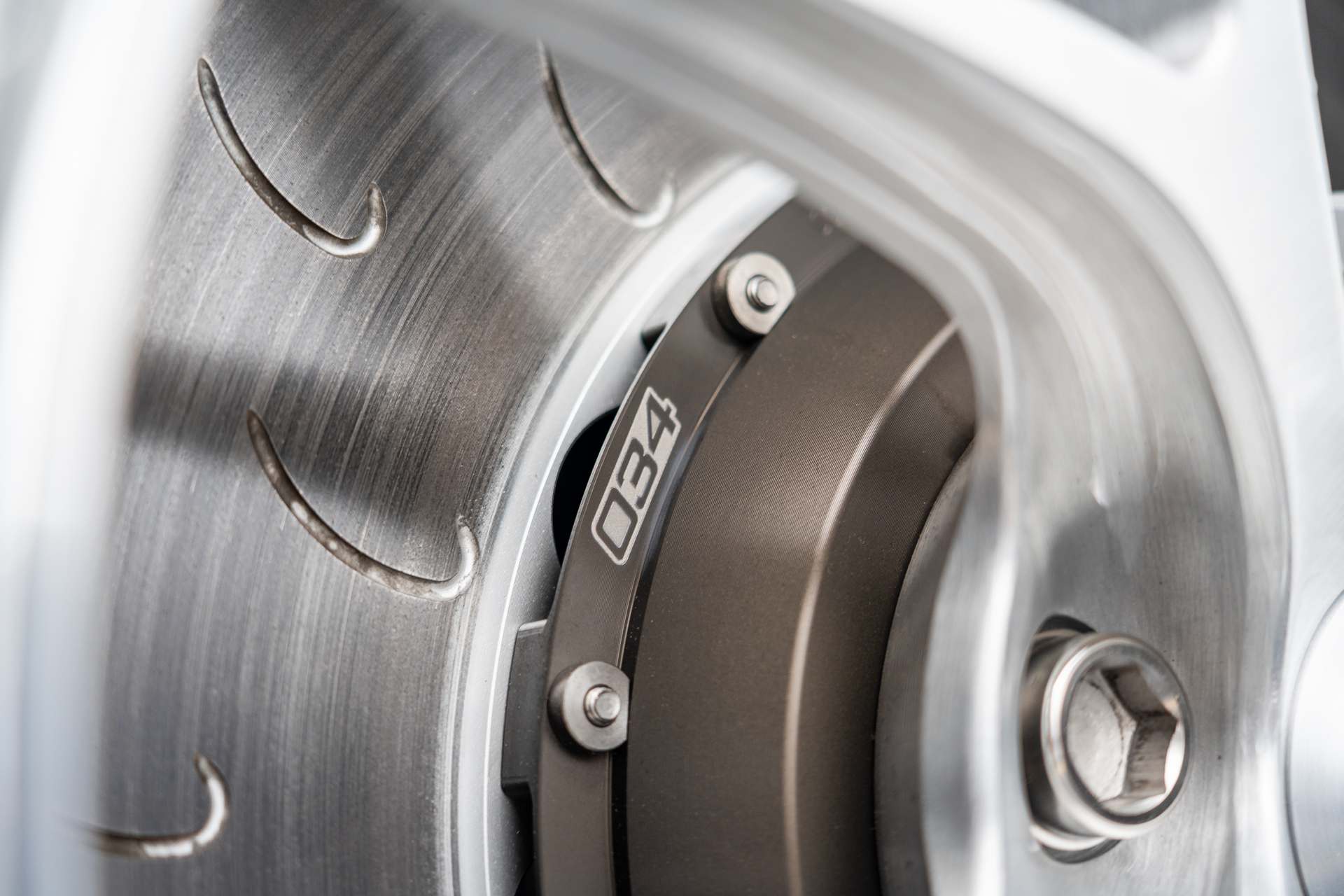
Specialist brake companies like Brembo and Zimmermann can offer two-piece “floating” rotors without restraining engineers through cost-cutting. Whereas the OE solutions have the friction ring riveted to the aluminum hat, the aftermarket products offer a reusable aluminum hat and replaceable friction rings. The rings are secured to the aluminum centers via fasteners that keep them secured yet allow them to move ever so slightly, hence the “floating” designation.
Although that may sound odd, it makes the rotor far more capable of handling high-performance track driving. Separating the two prevents heat in the ring from transferring to the hat, reducing the thermal load absorbed by the hub and wheel bearing. It also allows the ring to heat and expand independently rather than being attached to the hat, reducing the risk of warping. Depending on the specific aftermarket brand, there’s also more open area around the base of the friction ring for the vanes to pull air through, aiding in cooling. Then, when the rotor ring is ready for replacement, you can swap it separately from the hat, which should keep costs relatively close to an OE rotor.
The Most Common Types Of Performance Brake Rotors
Rotors come in all shapes and sizes, but their appearance doesn’t entirely dictate their performance. Check out the various kinds of performance rotors here and see which may be best for you.
Blank Rotors
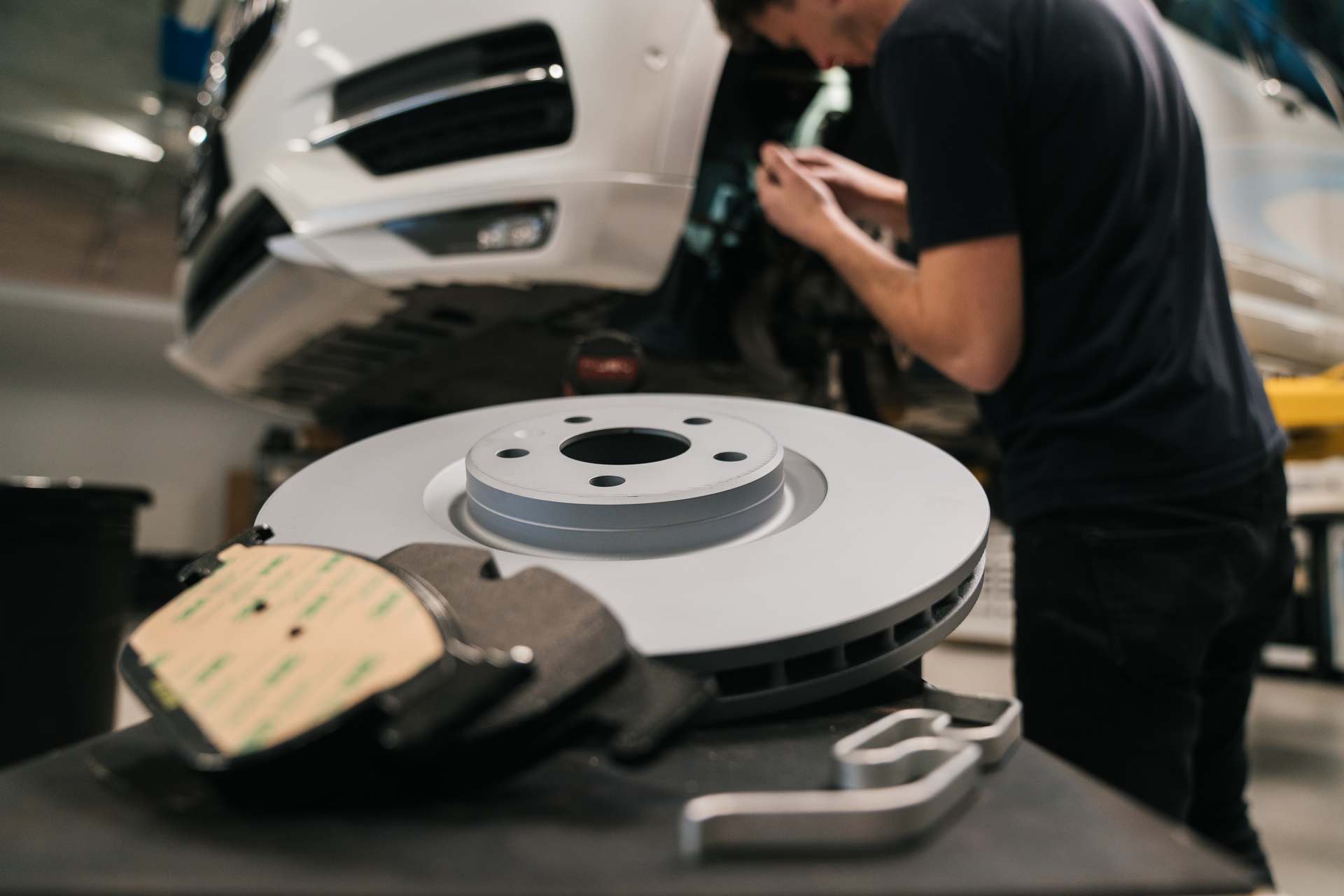
Blank rotors have always been the most common type of rotors automakers use on their cars. The term “blank” refers to the rotor’s friction ring surface devoid of grooves or dimples. They’re typically the least expensive to purchase because they don’t require any extra machining once balanced, and they’re readily available and made from alloys with a higher carbon content. These are an excellent choice for anyone who likes to drive spiritedly on back roads and attends autocross events, but there are better options for regular track driving.
Slotted Rotors
Slotted rotors are defined by the milled grooves in the rotor’s friction surface. These grooves take different forms depending on the manufacturer, so some will be simple, straight lines, while others will be curved patterns. Regardless of design, the purpose is to vent built-up gases.
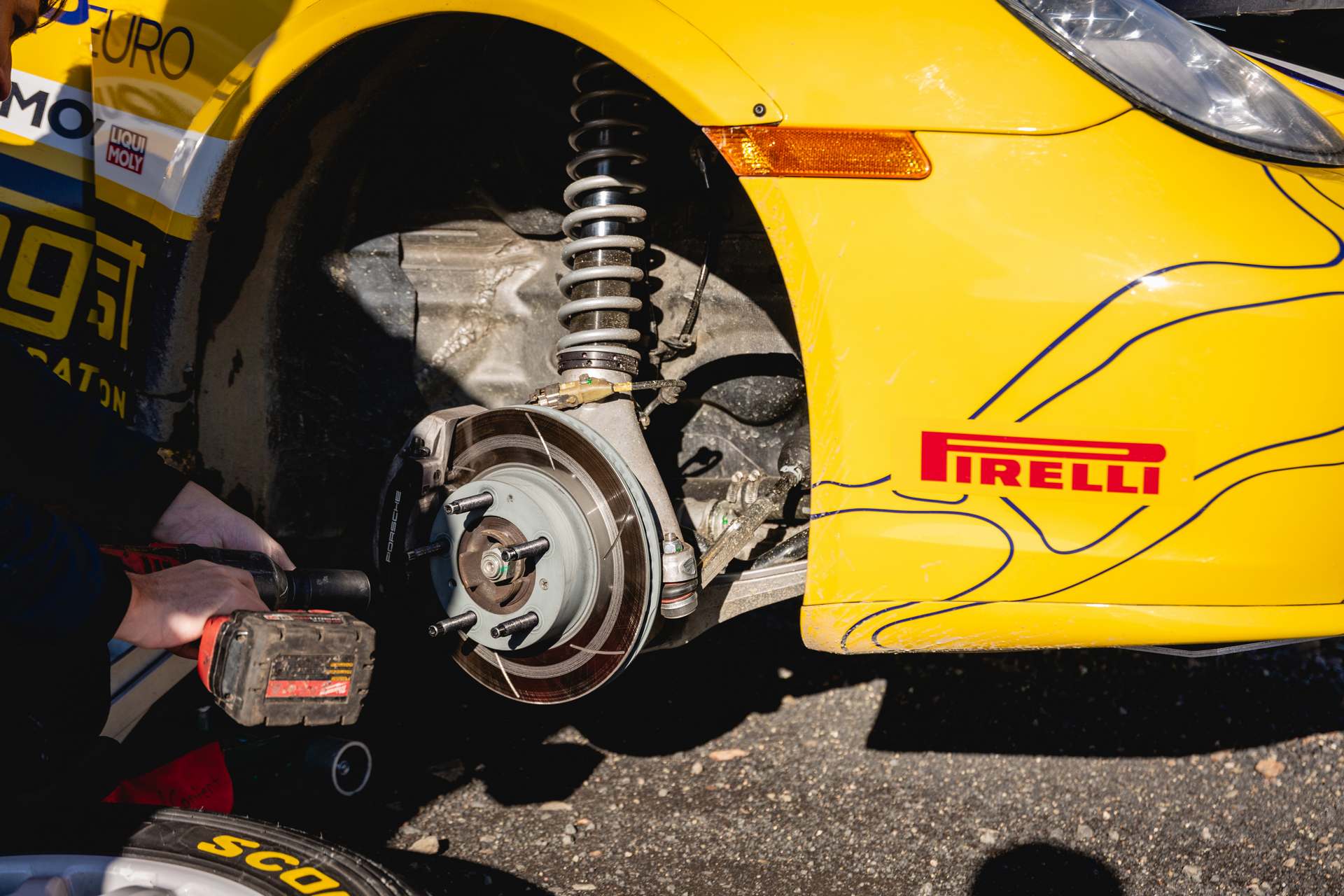
As the brake pads wear away against the disc, a small layer of gas builds between the rotor and pad in a phenomenon called outgassing. The gas layer can be strong enough to interfere with the pad’s contact with the rotor, reducing braking effectiveness. Those slots allow the gases to escape, ensuring the pads always have excellent contact with the rotor. Combined with high-carbon metallurgy, the slotted rotor is arguably the best choice for anyone looking for a performance rotor capable of withstanding light track duty on a budget.
Drilled Rotors
Drilled brake rotors are defined by the individual holes milled into the friction surface. They’re widespread on European sports cars meant for street driving, i.e., the Porsche Carrera, BMW’s M cars, Audi’s RS models, and Mercedes-AMG models. Automakers choose them because of their gas-evacuation properties similar to slotted rotors; however, some also specify improved water dispersal properties. Either way, they’re better than a blank rotor for repeated back-road drives.
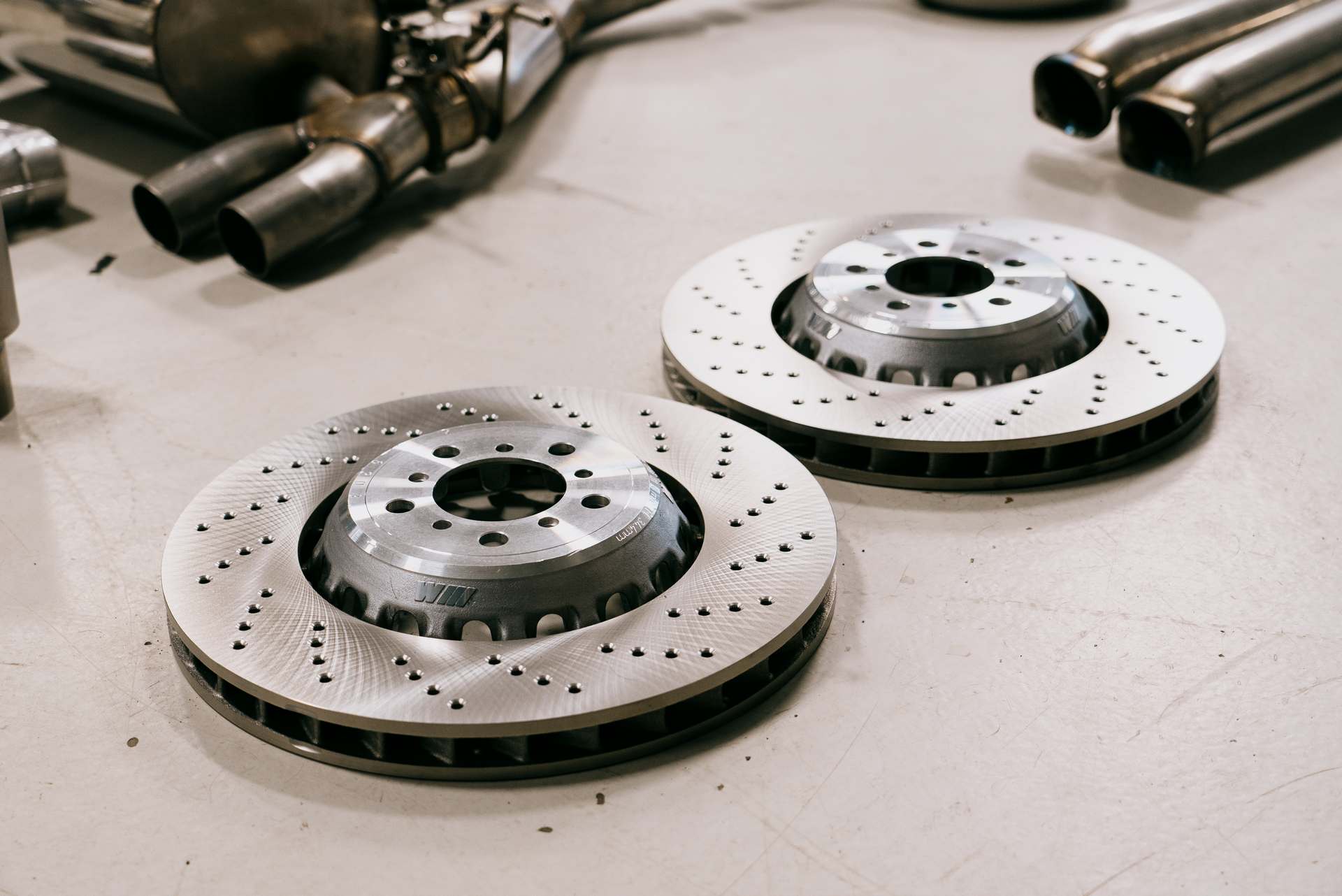
Drilled rotors are great for spirited street driving and autocross, but typically don’t last as long as the slotted rotors with regular track use. The lack of longevity comes crazing at high temperatures, where the rotor surface forms micro-cracks due to the intense thermal load. Cracks will form between the drilled holes, and while not catastrophic when caught early, ignoring them will lead to an incident on the track. It’s best to replace them once the cracks have formed.
Slotted & Drilled
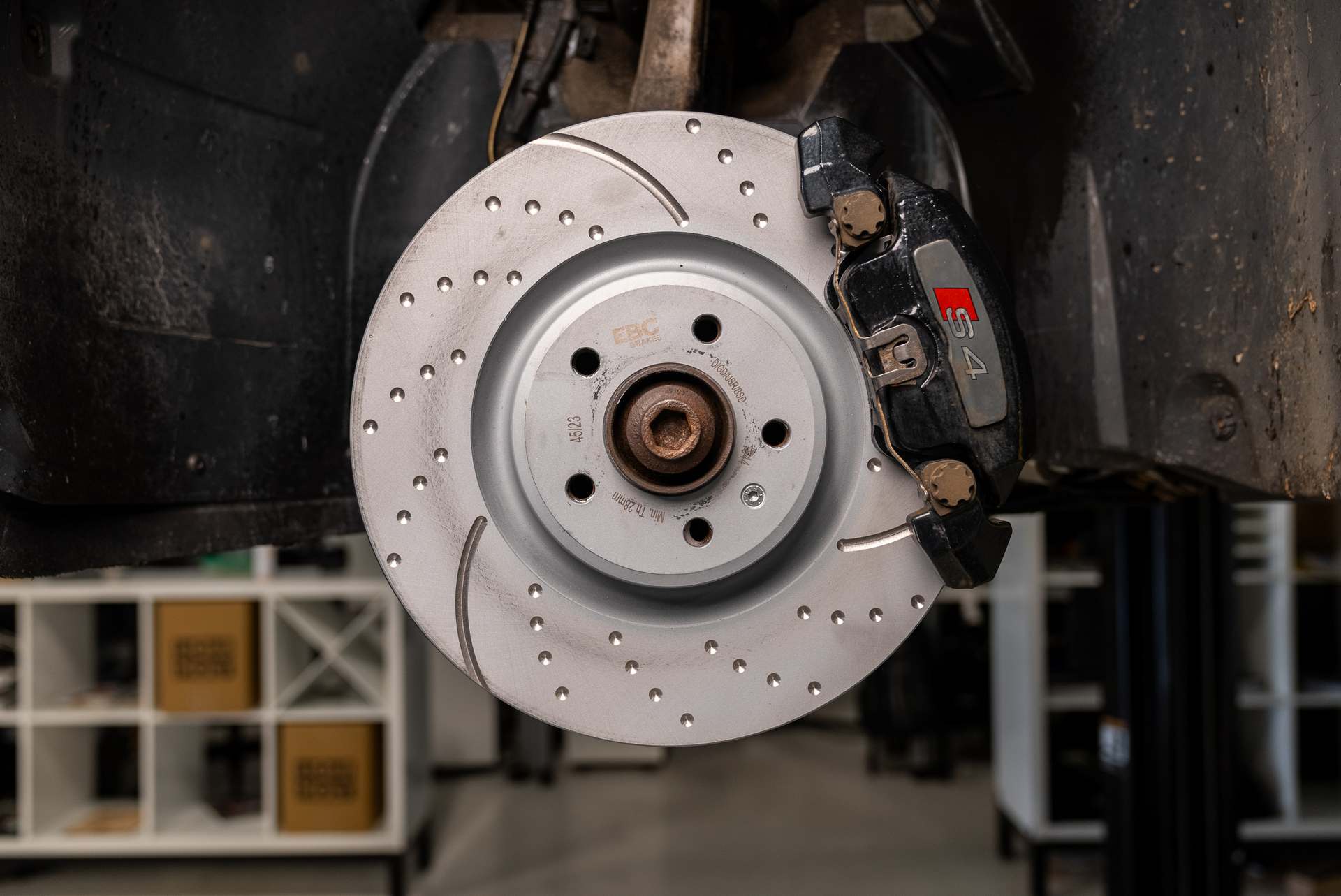
Can’t decide between a slotted or drilled rotor? Well, you can have both! A handful of aftermarket companies—like EBC and Stoptech—offer rotors with drilled dimples and milled slots. They retain the positive benefits of drilled and slotted rotors, but no other advantage. Assuming the metallurgy is high quality, they’ll perform better than a blank on track but only offer aesthetic benefits on the street.
Multi-piece Rotors
Aftermarket rotors featuring an aluminum hat that bolts to a replaceable rotor ring are the ultimate choice for any vehicle that sees regular track time. Their multi-piece construction allows for the best thermal performance and lowest weight of all rotor types, barring carbon ceramic. Unfortunately, they’re not readily available for all cars, with likely only the more popular rotor sizes for performance vehicles like an M3 or Carrera. Solely street-driven cars won’t be driven hard enough to see the benefits of a multipiece rotor beyond its weight.
Slotted Rotors vs. Drilled Rotors Demystified
It’s time to upgrade your braking system; which do you choose?
Slotted and drilled rotors are often touted as significant upgrades that improve braking distances and give you more performance, and that’s simply not the case. The rotor’s job is to absorb and dissipate the heat produced by the pads clamping on the disc, and while a larger rotor allows for a larger pad, that upgrade requires changes to the other components around it. However, a drilled or slotted rotor will be an upgrade in the right situations and with the right supporting parts.
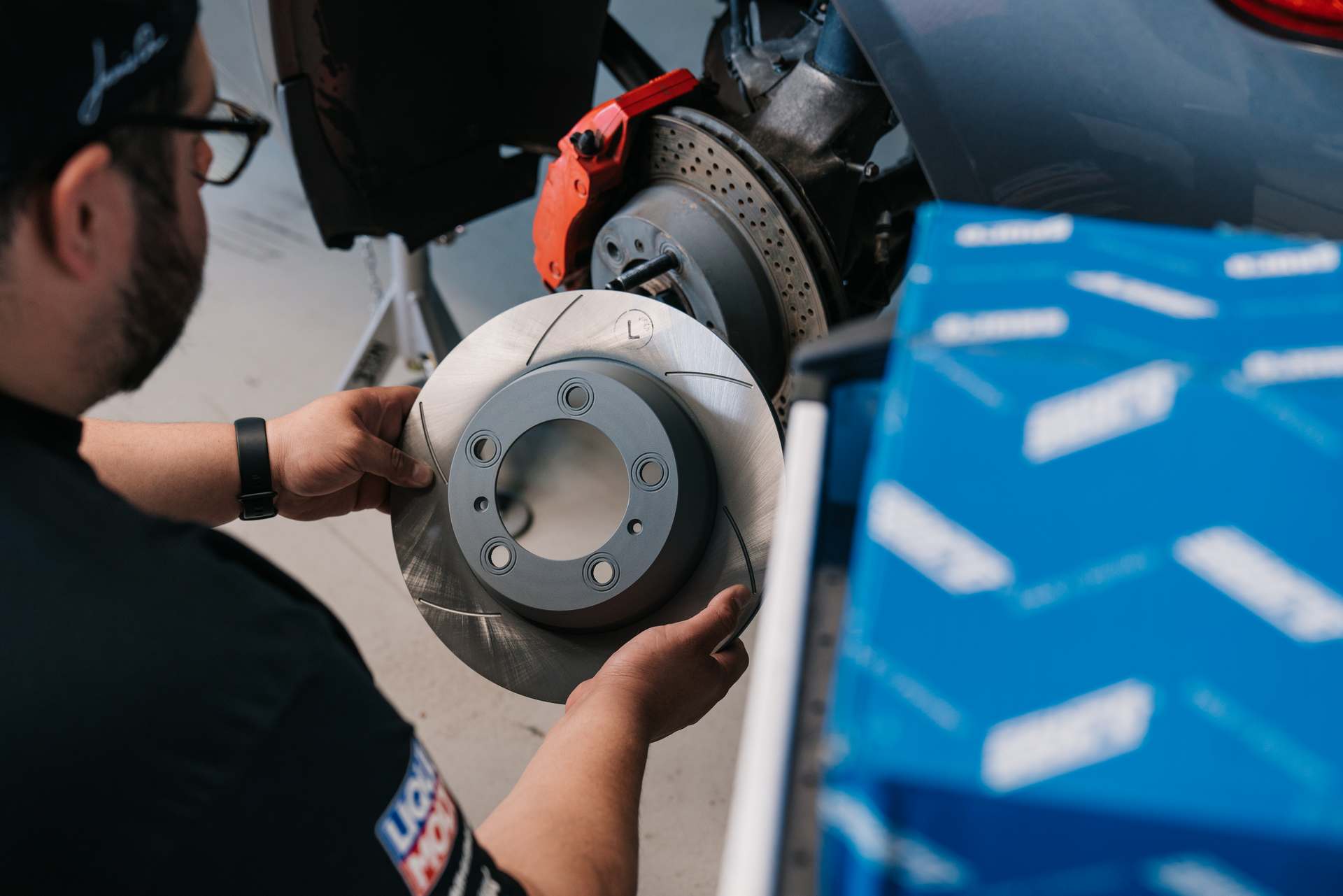
If you’re frequently on the race track, bombing down back roads, or carving through cones at an autocross, a slotted or drilled rotor will make a difference over a blank rotor. Each of those situations will require a durable rotor, and the advantages of the drilled holes and slots for brake feel, water dispersion, and thermal stability make them the better choice. Those benefits won’t be as helpful on a daily-driven car unless you drive it hard regularly.
If you’re not driving hard but still want the slotted or drilled rotor for its more exciting looks, that’s fine too, but know that they may shorten your brake service intervals. The milled features in both rotors can cause more noise during braking, and they will chew through the pad faster. The latter point benefits some, as the grooves will slightly cut into the brake pad, cleaning the pad surface from any contaminants or rust on the rotor after sitting in wet weather. If you don't mind slightly quicker pad wear, a drilled or slotted rotor will be fine for daily driving.
Is Bigger Always Better?
No! Size matters when it comes to your brakes. Too little means poor repeated stopping power, but too much means low brake temps and excessive rotating mass, which will also hinder stopping performance. Although that sounds far-fetched, it’s simple science.
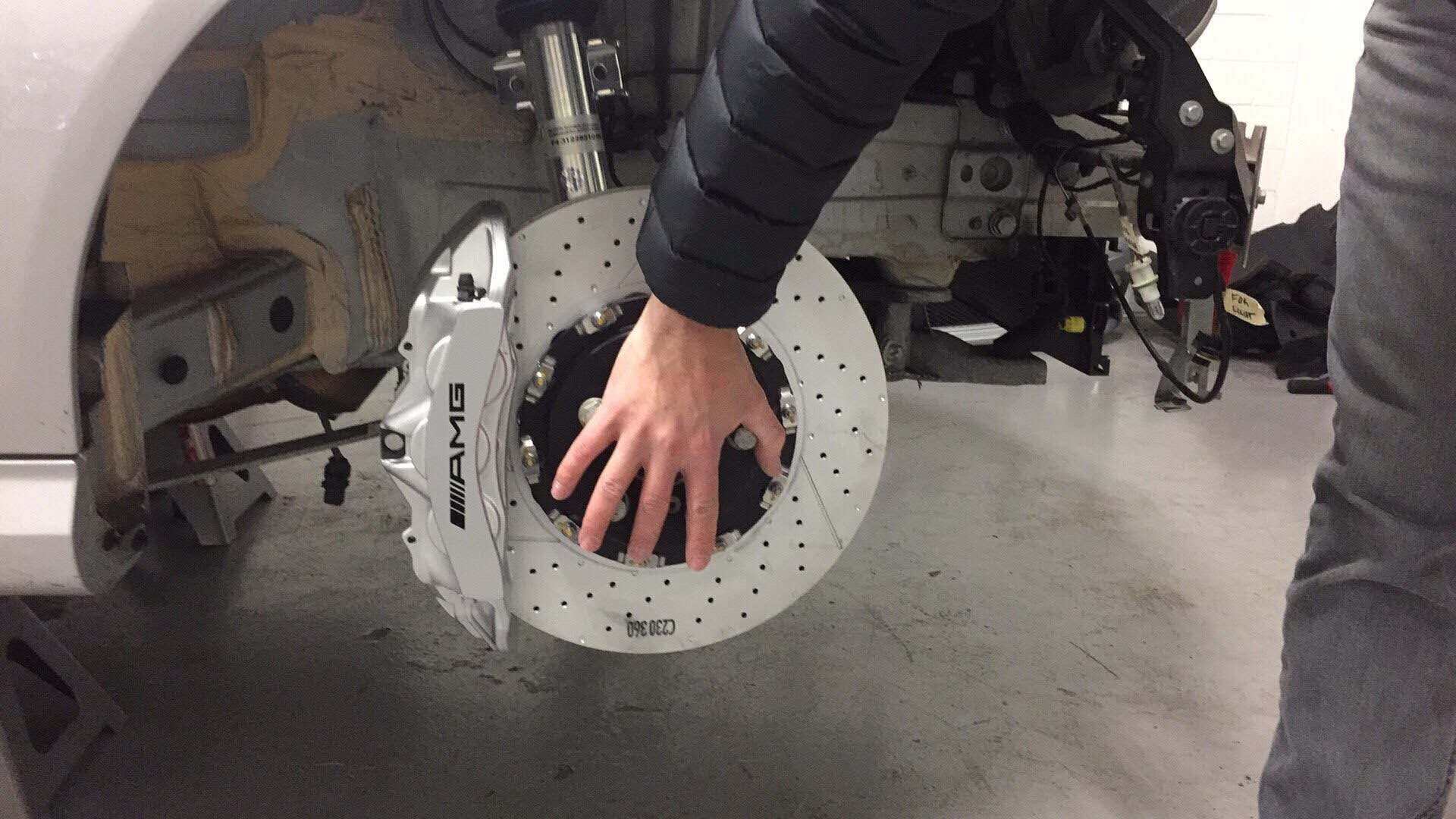
Brake discs and pads, like engine oil, are most effective within a specific temperature range based on their composition. Increasing the size of your rotors and pads can give the brake system the cooling capacity for repeated aggressive braking without overheating. However, smaller, lighter, and less powerful vehicles won't carry the same speeds or have the same mass to slow down as larger, more powerful supercars and sports cars.
Less mass and speed mean less force is required to stop, ultimately creating less heat under braking. Enormous rotors and multi-piston calipers on those lighter, less powerful cars would prevent them from reaching the necessary temperature range for the best possible stopping power the pads can provide. Theoretically, you could replace the pads with ones featuring a cooler operating range, but you’d still have all the extra unsprung weight the oversized rotors and calipers carry. Instead, sticking with a correctly sized system would keep the overall weight down while allowing the brakes to operate in their most efficient range.
Hopefully, that covers all of the questions you may have about your braking system and its rotors. There's plenty more to learn about, especially when pairing a set of pads with a rotor; luckily, we can help you with that, too. If you have any more questions, don't hesitate to contact our Customer Service experts, who can answer any other questions and guide you toward the right braking components for your application.